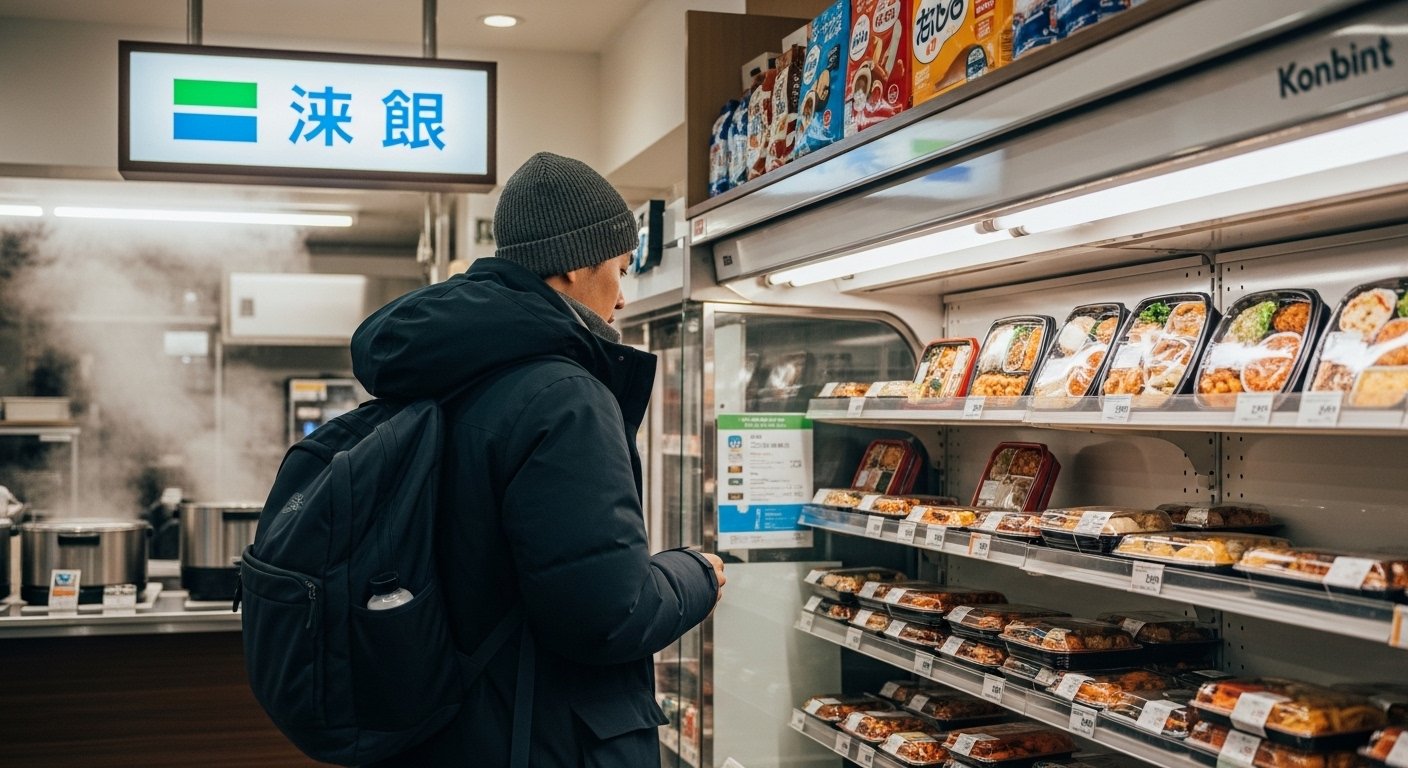
*Images used in this article are for illustration only. They may not be directly related to the content.
Winter Warm-Up: Your Guide to Budget Breakfasts Beyond Conbini in Japan
Waking up in Japan during winter often brings a distinct chill. While the convenience of a nearby konbini (convenience store) is undeniable, a cold sandwich or rice ball might not be the warm, comforting start you’re looking for. Many international visitors face this common dilemma: where to find diverse, affordable, and warm breakfast options that aren’t just a hotel buffet, especially early in the morning?
You’re not alone if you feel unsure about where locals eat, how to order, or navigate menus outside of familiar chains. This guide removes the friction, providing practical, on-the-ground information to help you discover authentic, budget-friendly Japanese breakfast experiences that will truly warm you up. Say goodbye to cold conbini mornings and hello to steaming miso soup and freshly grilled fish.
Table of Contents
- The Winter Breakfast Challenge
- Where Locals Go: Warm & Affordable Breakfast Hubs
- Decoding the Menu: Ordering Made Easy
- Price Breakdown: Budget-Friendly Mornings
- Point & Speak: Essential Phrases
- Pro-Tips for Your Japanese Breakfast Adventure
- Common Mistakes to Avoid
- Quick Reference Card
- FAQ: Winter Breakfast in Japan
- Conclusion
- Disclaimer
The Winter Breakfast Challenge
Japan in winter is beautiful, but the mornings can be crisp. Relying on convenience store food for breakfast often means settling for items that are not warm, lack variety, and don’t quite hit the spot when you’re seeking comfort. Finding diverse, affordable, and warm breakfast options outside of your hotel can seem daunting, especially if you’re an early riser.
Many visitors feel a language barrier prevents them from exploring local eateries. You might wonder where Japanese people actually eat breakfast before work, how to order from an unfamiliar menu, or simply where to begin looking for a truly satisfying start to your day. This guide aims to bridge that gap, providing practical solutions for a warm and budget-friendly morning meal.
Where Locals Go: Warm & Affordable Breakfast Hubs
Forget the cold conbini food. Japanese locals have a range of go-to spots for early morning, warm, and budget-friendly meals. These establishments are often found near train stations, business districts, and main roads, making them easy to locate no matter where you are in Japan.
Gyudon Chains: Your Traditional Power Start
For a hearty, warm, and genuinely Japanese breakfast, look no further than the ubiquitous gyudon (beef bowl) chains. Sukiya, Yoshinoya, and Matsuya are your top contenders. Many of these open as early as 5:00 AM or 6:00 AM, with some operating 24 hours. They are excellent choices for early risers seeking a filling meal.
- What to expect: These chains offer specific “morning sets” (モーニングセット – mōningu setto) that often include a small bowl of rice, miso soup, a main dish like grilled salmon (鮭 – shake), natto (fermented soybeans), or a mini gyudon. Portions are generous enough to fuel your morning explorations.
- Price point: Budget breakfast sets typically range from ¥350 to ¥600. This is significantly cheaper than most hotel breakfasts.
- Visual cues:
- Yoshinoya: Prominent red signboard with white Japanese characters. Look for the kanji 牛丼 (gyudon).
- Sukiya: Yellow and blue logo. Known for wider menu variety beyond just gyudon.
- Matsuya: Orange logo. Often includes free miso soup with main dishes, and many locations feature ticket machines with English options.

Cafe Morning Sets: A Western Touch
If you prefer toast, eggs, and a hot coffee for your morning ritual, Japan’s cafe chains are your answer. Doutor Coffee and Komeda Coffee are nationwide favorites that offer excellent “morning sets.” These usually start serving right when they open, often around 7:00 AM.
- What to expect: Cafe morning sets typically include a hot drink (coffee or tea), a slice of toast (often thick and fluffy), and a side like a boiled egg, scrambled eggs, or a small salad. Some larger cafes might offer pastries or sandwiches.
- Price point: Cafe morning sets usually cost between ¥400 and ¥700, offering good value for a comfortable, warm breakfast experience.
- Visual cues:
- Doutor Coffee: Green and white logo. Often has outdoor seating or a bright, modern interior.
- Komeda Coffee: Distinct retro-style logo with red and yellow. Known for its generous portions and cozy, somewhat old-fashioned ambiance. They often provide a free piece of toast with any drink order during morning hours.

Beyond the Chains: Bakeries and Local Eateries
Don’t limit yourself to chains if you want a local flavor. Many smaller bakeries (パン屋 – pan’ya) open early, filling the air with the smell of freshly baked bread. They often have small seating areas where you can enjoy a pastry and a hot drink.
- What to expect: A wide selection of sweet and savory breads, from classic croissants to unique Japanese creations like melon pan or curry bread.
- Price point: Individual items range from ¥150-¥300, making it easy to create an affordable breakfast.
- Visual cues: Look for display windows filled with various breads and pastries. Signs with ‘焼き立てパン’ (yakitate pan – freshly baked bread) are a good indicator.
Smaller, independent traditional Japanese diners (定食屋 – teishokuya) might also offer breakfast sets. While less common in tourist areas, they provide an authentic glimpse into local life. Keep an eye out for signs advertising ‘朝食’ (chōshoku – breakfast).
Decoding the Menu: Ordering Made Easy
One of the main pain points for international visitors is the ordering process. Japan has efficient systems, and once you understand them, ordering becomes straightforward, even without extensive Japanese language skills.
Step 1: Locating Your Eatery and Understanding Hours
Visual cue: Use Google Maps and search for “breakfast near me” or “morning set.” Look for prominent chain logos as described above. Verify opening hours – many budget spots open by 6:00 AM or 7:00 AM. Look for ‘営業中’ (eigyo-chu – open) or specific hours posted.
What to do: Plan your route. Most stations will have multiple options. Don’t be afraid to walk a few blocks for more choice. Even in residential areas, a small bakery or local diner might be hiding.

Step 2: Navigating the Ordering System
Option A: Ticket Machines (食券機 – shokkenki) at Gyudon Chains & Some Diners
Visual cue: Typically large, illuminated touch screens or button panels located near the entrance. They often display large, appetizing pictures of dishes with prices. Look for a small flag icon (e.g., UK or US flag) or a button labeled ‘English’ for language selection.
- Locate the machine: It’s usually just inside the entrance.
- Select language (if available): Tap the flag or ‘English’ button.
- Choose your meal: Browse the categories (e.g., ‘Morning Set,’ ‘Gyudon,’ ‘Side Dishes’). Look for the ‘モーニングセット’ (mōningu setto) button. Tap the picture of your desired meal.
- Pay: Insert cash (yen bills and coins are accepted) or use a cashless payment option (IC card like Suica/Pasmo, credit card – check for logos) as prompted.
- Collect ticket(s) and change: The machine will dispense a ticket (or multiple) and any change.
- Hand tickets to staff: Find a seat, and when staff approach (or by going to the counter), present your ticket(s). They will often take it without a word, process your order, and bring your food.
What to do: Don’t panic if there’s no English. Pointing at the pictures and then pointing to yourself while making eye contact often suffices. The most popular breakfast items are usually prominently displayed.

🎯 Local Pro-Tip: If the ticket machine is entirely in Japanese and you’re unsure, look for the cheapest options, often located on the bottom row or clearly labeled as ‘Morning Set.’ A safe bet is usually the standard Gyudon or a basic breakfast set.
Option B: Counter Ordering at Cafes & Bakeries
Visual cue: A long counter where staff take orders. Menus might be overhead, on the counter, or on laminated sheets. Cafes often have enticing displays of pastries and cakes.
- Queue: Line up if there’s a queue.
- Order: Point to the ‘モーニングセット’ (mōningu setto) on the menu or a specific item you want. Use the “Point & Speak” phrases below.
- Specify drink (if necessary): If your morning set includes a drink, they might ask “Hot or ice?” (ホットかアイスか – Hotto ka aisu ka?) or “Coffee or tea?” (コーヒーか紅茶か – Kōhī ka kōcha ka?).
- Pay: Cash or cashless payment options.
- Collect: At cafes, you might collect your drink and a buzzer (to collect food later), or they’ll bring it to your table. At bakeries, they’ll pack your items and you take them to a table.
What to do: A simple “これ、お願いします” (Kore, onegai shimasu – “This one, please.”) while pointing works wonders. Most staff in cafes have some experience with international customers.

💰 Price Breakdown: Budget-Friendly Mornings
Eating a warm, satisfying breakfast in Japan doesn’t have to be expensive. These are typical price ranges you can expect:
💰 Price Breakdown
| Item/Type | Cost Range |
| Gyudon Chain Breakfast Set (e.g., Sukiya, Yoshinoya, Matsuya) | ¥350 – ¥600 |
| Cafe Morning Set (e.g., Doutor, Komeda Coffee) | ¥400 – ¥700 |
| Bakery (1-2 pastries + coffee) | ¥300 – ¥600 |
| Convenience Store (cold sandwich + coffee) | ¥400 – ¥600 |
| Hotel Breakfast Buffet (average) | ¥1,500 – ¥3,000+ |
Prices verified as of January 2026. Subject to slight variations.
As you can see, opting for local budget options provides significantly better value than most hotel breakfasts, often at comparable or even lower prices than convenience stores, but with the added benefit of a warm, sit-down meal.
🇯🇵 Point & Speak: Essential Phrases
These phrases will help you navigate your morning meal. Show this section to staff if you’re stuck; they can read the Japanese.
🇯🇵 Point & Speak
Show this section to staff if you’re stuck. They can read the Japanese.
English: Morning set, please.
モーニングセット、お願いします。
(Mōningu setto, onegai shimasu.)
English: What is the recommended breakfast?
おすすめの朝食は何ですか?
(Osusume no chōshoku wa nan desu ka?)
English: Hot coffee, please.
ホットコーヒー、お願いします。
(Hotto kōhī, onegai shimasu.)
English: Can I have this one? (while pointing)
これ、お願いします。
(Kore, onegai shimasu.)
English: Excuse me / Sorry (to get attention)
すみません
(Sumimasen.)
Pro-Tips for Your Japanese Breakfast Adventure
Maximize your experience with these insider insights:
🎯 Local Pro-Tip: Don’t limit your search to just “breakfast.” Many ramen shops, Soba/Udon shops, and even some Izakaya (pub-style restaurants) offer breakfast menus, particularly around train stations. Look for signs saying ‘朝定食’ (asa teishoku – morning set meal) or ‘朝ラー’ (asa rā – morning ramen). These are often delicious, hearty, and very local.
- Embrace the diversity: Japanese breakfast isn’t just fish and rice. You can find options ranging from deeply traditional to distinctly Western. Be open to trying new things like natto for a unique experience.
- Location, location, location: The best places for affordable, early, warm breakfasts are almost always within a 5-10 minute walk of major train stations or bus hubs. They cater to commuters.
- Look for ‘禁煙’ (kin’en): Most budget eateries are now smoke-free indoors, especially in major cities. If you’re sensitive to smoke, look for this kanji, which means “no smoking.”
- Utilize official websites: Chains like Sukiya, Yoshinoya, Matsuya, Doutor Coffee, and Komeda Coffee have official websites (linked below). While often in Japanese, they usually have store locators, sometimes with English options, and can help you find the nearest branch and check menus.
- Quiet but efficient: Breakfast spots in Japan are typically quiet, efficient places. Don’t expect boisterous conversation. Enjoy the calm and the focused service.
Common Mistakes to Avoid
To ensure a smooth breakfast experience, be aware of these pitfalls:
- Assuming all places open early: While many do, smaller, independent cafes or restaurants might open later, around 9:00 AM or 10:00 AM. Always check hours.
- Not checking for English menus on ticket machines: Many modern ticket machines have a language selection. A quick tap can save you guesswork.
- Over-ordering: Japanese portions, especially for morning sets, are often designed to be satisfying. Start with a standard set before adding extra toppings or sides.
- Ignoring the condiments: Gyudon chains often provide various condiments (pickled ginger, chili powder) at the table. Experiment with them to customize your dish.
- Expecting fast food speeds in cafes: While efficient, cafes like Komeda Coffee are designed for a more relaxed pace than a quick grab-and-go. Enjoy the atmosphere.
📋 Quick Reference Card
Screenshot or print this section for easy access on your phone:
📋 Quick Reference Card: Warm, Budget Breakfast in Japan
Screenshot or print this section for easy access:
- ✅ Best Options: Gyudon Chains (Sukiya, Yoshinoya, Matsuya), Cafe Chains (Doutor, Komeda Coffee).
- ✅ Typical Hours: Gyudon chains 5/6 AM – 24h; Cafes 7 AM onwards.
- ✅ Price Range: ¥350 – ¥700 for a full set.
- ✅ Ordering: Look for ticket machines (check for English) or order at counter (point & speak).
- ✅ Key Phrase: “モーニングセット、お願いします。” (Mōningu setto, onegai shimasu. – Morning set, please.)
- ✅ Visual Cues: Red/yellow/orange signs for gyudon, green/red/yellow for cafes. Look for pictures.
- ✅ Online Help: Use Google Maps; check official chain websites for locations.
Frequently Asked Questions
Are there vegetarian options available at these budget breakfast spots?
While dedicated vegetarian breakfast sets are rare, some options might exist. Matsuya occasionally offers a “rice and miso soup set” without meat, and cafes offer toast or bread. It is best to use a translation app or point to ingredients you wish to avoid, but expect limited choices. Sukiya and Yoshinoya are primarily meat-focused.
Can I use credit cards or IC cards at these restaurants?
Yes, major chains like Sukiya, Yoshinoya, Matsuya, Doutor, and Komeda Coffee widely accept IC cards (Suica, Pasmo, Icoca) and most major credit cards. Smaller, independent eateries or older ticket machines might be cash-only, so always carry some yen just in case.
Are these places usually crowded in the morning?
Yes, especially during peak commuter hours (7:30 AM – 9:00 AM) near train stations. However, turnover is fast, particularly at gyudon chains, so you typically won’t wait long for a seat. Cafes might have a more relaxed pace. Early mornings (before 7:00 AM) are generally quieter.
Is it acceptable to just order a coffee and not a full meal?
At cafes like Doutor or Komeda, it is perfectly acceptable to order just a coffee or a drink. At gyudon chains, the expectation is usually that you order a meal, though a drink-only order might be technically possible, it’s not common practice for dine-in guests.
Are these options available outside of major cities like Tokyo and Kyoto?
Absolutely. These national chains have a presence across Japan, in both urban and suburban areas. You’ll find Sukiya, Yoshinoya, Matsuya, Doutor, and Komeda Coffee branches in most prefectural capitals and larger towns, making them reliable options wherever you travel in Japan.
Conclusion
Don’t let the winter chill or perceived language barriers dictate your Japanese breakfast experience. By knowing where locals eat and understanding simple ordering methods, you can easily find warm, delicious, and budget-friendly meals beyond the conbini. From traditional grilled fish sets to comforting toast and coffee, Japan offers diverse morning options that provide a genuine taste of local life.
Embrace these practical tips and venture out for a truly satisfying start to your day. Your winter mornings in Japan can be just as warm and authentic as your other travel experiences.
What’s your first warm breakfast choice going to be? Share your experiences in the comments!
Useful Links
- Sukiya Official Website (Japanese)
- Yoshinoya Official Website (Japanese)
- Matsuya Official Website (Japanese)
- Doutor Coffee Official Website (Japanese)
- Komeda Coffee Official Website (Japanese)
Disclaimer
Prices and opening hours mentioned are subject to change. While efforts have been made to provide accurate information as of January 2026, it is always recommended to verify details closer to your travel date, especially for smaller, independent establishments. The “Point & Speak” phrases are for basic communication and may not cover all dietary restrictions or complex requests. It is advisable to have a translation app for specific dietary needs.